
On Tuesday, the 16th the International Association for the Evaluation of Educational Achievement (IEA) published the results of PIRLS 2021 (Progress in International Reading Literacy Study).
In 2021, the number of countries participating in the study increased to 57. A total of 346,992 students worldwide took part in the international study. 5,637 students from 190 schools participated in PIRLS 2021 from Georgia.
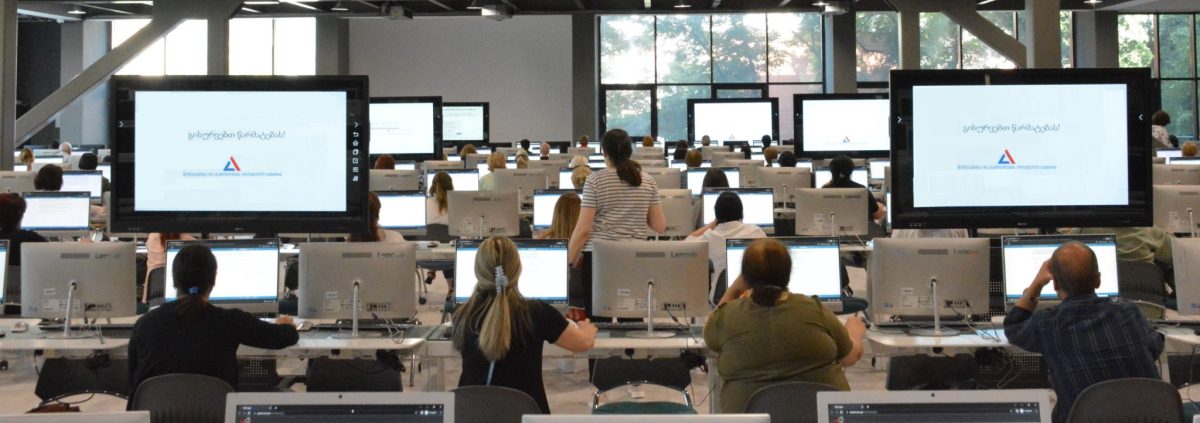
The PIRLS 2021 study was conducted under different circumstances compared to previous cycles due to the worldwide COVID-19 pandemic. A large number of students were switched to distance learning mode, therefore, the number of students in the classrooms of the schools selected for testing was less than the acceptable percentage of the reliability of the study. This is why, according to the decision of the IEA, in 14 countries (United States of America, Bahrain, United Arab Emirates, Ireland, Qatar, Latvia, Lithuania, Morocco, Saudi Arabia, Hungary, Kazakhstan, Northern Ireland, Croatia, Georgia), students wrote the test in the fall instead of the spring of 2021, and in 6 countries the test was conducted one year later. Therefore, a new stream of fourth-graders took part in the test in these countries.
Considering the mentioned circumstances, the IEA highly recommended not to compare the results of the countries that wrote the test in the fall with the results of the countries that completed the test in the spring.
During the testing period, the average age of students in Georgia was 5 months higher than the average age of students in most countries. A similar situation existed in 13 other countries, where, due to the age difference, it was difficult to compare with the previous cycles. PIRLS data indicated a substantial deterioration in achievement in the vast majority of participating countries.
It should be noted that Georgia is not in the list of countries where the average literacy score has decreased.
Along with the evaluation of the student’s achievements in literacy, the task of the research is to study the impact of school, teacher and family factors on the student’s literacy achievements and the formation of literacy skills. The impact of these factors on student achievement, the main findings and results of the research will be presented later in the form of a national research report.
At this stage, some general findings can be introduced:
- Out of the 57 countries included in the study, only in 6 countries are boys able to have similar achievements in literacy as girls. In the remaining 51 countries, including Georgia, girls have better literacy achievements than boys. In none of the countries included in the study do boys have an advantage over girls. In Georgia, the difference between the achievements of students by gender is statistically significant and is maintained throughout the entire research cycle;
- According to recent studies, a comparative analysis of urban and rural schools in Georgia shows the advantage of urban schools in the literacy achievement of students, although the 2021 study shows a reduction in the gap between rural and urban schools due to the improvement of rural school achievement. Improvements in rural school student outcomes were also seen in the 2019 Math and Science Achievement Scores (TIMSS 2019);
- In the 2021 study, a statistically significant difference between the achievement of students in private and public schools remained. Private school students do better on literacy tasks.
PIRLS (Progress in International Reading Literacy Study) is an international literacy study of fourth-grade students conducted by the International Association for the Evaluation of Educational Achievement (IEA) since 2001.
Georgia participated in the last four cycles (2006, 2011, 2016 and 2021). The research group of the National Assessment and Examinations Center is leading the PIRLS in Georgia. The research aims to evaluate the reading skills of 9-10-year-old (fourth-grade) students and determine the impact of such contextual factors as the learning environment, parental involvement, school management, teacher qualifications, information and communication technologies, etc., on the student’s learning process.
PIRLS focuses on the reading goals and comprehension processes of fiction and informational texts. Half of the PIRLS assessment focuses on acquiring literary expertise, and the other half focuses on acquiring and using information.
More on PIRLS 2021 can be explored in English at the link.

 National Assessment and Examinations Center